It started with the Mothers of Srebrenica, women who lost family members during the Balkan conflict. When migrants began crossing the nearby border and people started drowning in the Drina, Nihad didn’t step back. He stepped up and focused on something most people don’t: the ones who didn’t make it.
Alongside helping survivors, he began visiting morgues, arranging burials, coordinating DNA testing, and tracking down families to tell them what had happened to someone they were waiting to hear from. He gave up a stable job at a supermarket chain to do this full time. Each person who dies on the route gets a named headstone. That really matters to him and to their loved ones.
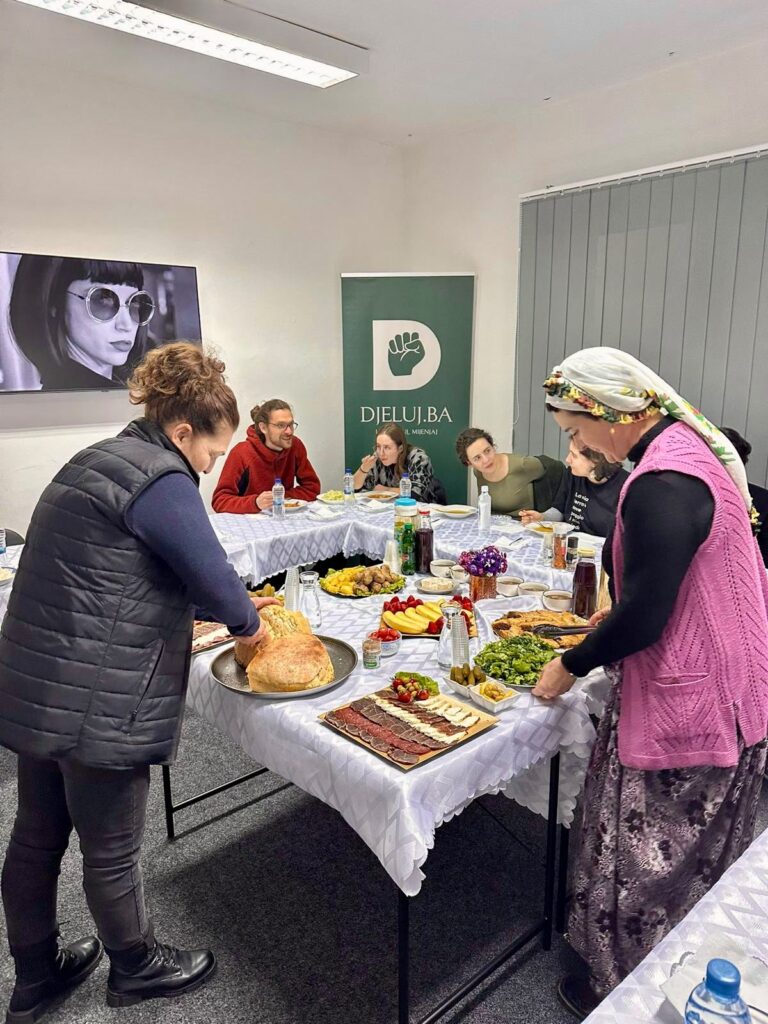
Poremma started helping in February 2025, introduced by a long-term Poremma contact, Diego. Nihad had found a space in Tuzla that could work as a proper community centre — somewhere migrants and local residents could actually come together — but it needed renovation before it could open. We provided one-off funding to make that happen: the fit-out, furniture, and materials to get it ready for use.

The centre now runs on four tracks: day-to-day support for people passing through; the ongoing work of identifying and burying those who die on the route; regular distributions of food, clothing, and essentials; and help getting people to hospitals and covering medical costs when needed. Around 500 people come through in a year.
Nihad had wanted a centre like this for years. It’s the first community space of its kind in Tuzla — and it came from one person who simply refused to look away.